1. Ancient Foundations of Biochar
1.1 Early Pyrotechnic Practices
The earliest forms of biochar emerged not from scientific rigor but from pragmatic experimentation. Ancient communities often burned biomass under restricted oxygen, creating a carbon-dense residue long before the terminology existed. These rudimentary pyrolytic traditions—whether used for clearing land or preserving nutrients—laid the foundation for what would later become a sophisticated soil amendment strategy. Small fires smoldered slowly, leaving behind a dark, porous char that early farmers noticed improved crop vitality. The pattern was subtle but unmistakable.
1.2 Terra Preta and Amazonian Soil Engineering
The Amazon Basin offers the most striking archaeological evidence of deliberate biochar production. Terra Preta, literally translated as “black earth,” stands as a testament to an advanced agronomic society that harnessed controlled carbonization to rejuvenate nutrient-poor soils. Carbonized plant matter, pottery shards, bones, and organic waste were strategically integrated into the soil matrix. The result was a self-regenerating, hyper-fertile substrate capable of sustaining dense populations in an otherwise infertile region. Its resilience is astonishing; Terra Preta retains fertility for centuries, outlasting natural soils and baffling early European explorers who encountered it.
1.3 Cultural Adoption Across Early Civilizations
Beyond the Amazon, variations of carbon-rich soil enhancement surfaced in multiple cultures. In Japan, for example, “Kishōtan” techniques relied on charcoal powders to improve soil structure. Indigenous Australians used controlled burns that inadvertently created micro-forms of biochar. Even in Nordic settlements, charcoal byproducts mingled with compost to improve moisture retention. These civilizations had limited understanding of molecular carbon retention, yet they recognized the empirical value of charred biomass. Their cumulative traditions demonstrate that biochar was not an anomaly but a recurring innovation across human history.
2. Scientific Rediscovery and Modern Validation
2.1 Agricultural Curiosities of the 19th and 20th Centuries
Interest in char-amended soils resurfaced in Europe during the early stages of industrial agriculture. Farmers observed that certain fields enriched with charcoal residue produced more robust yields. Agricultural journals of the era documented these anomalies, yet the mechanisms remained elusive. Scientific curiosity simmered, but it was overshadowed by a fascination with synthetic fertilizers that dominated the industrial mindset. Still, pockets of experimentation persisted, capturing the faint beginnings of a modern understanding.
2.2 Soil Science Breakthroughs and Carbon Sequestration Insights
The latter half of the 20th century marked a pivotal shift. Soil scientists began analyzing the structural and chemical stability of carbon-rich soils, uncovering biochar’s extraordinary longevity. Its labyrinthine pore structure, cation-exchange capacity, and ability to immobilize nutrients attracted significant attention. Researchers recognized that biochar acted not merely as a fertilizer but as a long-term carbon sink. This revelation coincided with rising global concern over atmospheric carbon accumulation, giving biochar renewed scientific legitimacy and urgency.
2.3 Transition From Folklore to Empirical Frameworks
As biochar reentered scholarly discourse, earlier cultural practices were reinterpreted through scientific methodology. Terra Preta was no longer viewed as an archaeological oddity but as a blueprint for sustainable soil engineering. Controlled experiments validated what ancient farmers had known intuitively. Biochar’s transition from folkloric artifact to quantifiable agricultural asset marked a paradigm shift. Suddenly, carbonized biomass became part of a much broader dialogue, spanning agronomy, climatology, and regenerative land management.
3. Contemporary Evolution and Global Applications
3.1 Industrial-Scale Pyrolysis and Technological Refinement
Modern biochar production now occurs on industrial scales, using sophisticated pyrolysis reactors capable of fine-tuning temperature, feedstock composition, and oxygen levels. These systems optimize yield, structural integrity, and carbon stability. What once required rudimentary smoldering pits has evolved into a technologically intricate process. Biochar is now engineered for specific applications—from horticulture and livestock bedding to water filtration and environmental remediation.
3.2 Climate Strategy Integration and Ecological Relevance
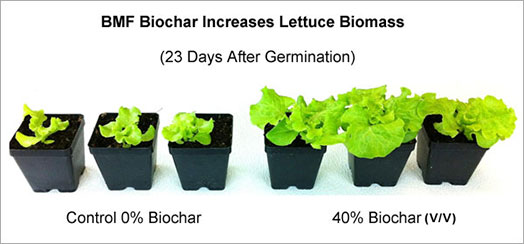
The contemporary climate conversation has elevated biochar from agricultural supplement to strategic carbon mitigation tool. By locking atmospheric carbon into a stable form, biochar offers a rare form of negative-emission technology. Its integration into global climate strategies reflects its ecological gravitas. Beyond carbon sequestration, biochar enhances soil health, reduces nutrient leaching, and supports microbial ecosystems. The result is a multifaceted resource deeply relevant to environmental resilience.
3.3 The Future Trajectory of Biochar Utilization
The trajectory of biochar points toward expanding relevance. As nations intensify commitments to carbon neutrality, interest in scalable biochar solutions grows. Research continues to explore novel applications such as biochar-concrete composites, urban landscaping, and bioremediation of contaminated sites. Its historical evolution—from smoldering biomass to engineered carbon technology—illustrates humanity’s persistent pursuit of sustainable innovation. Biochar’s future is not speculative; it is unfolding with measured certainty.